What it means
A Viking hood blower that jumps to high on its own is usually its heat sensor thermostat reacting to hot air above the cooktop. It speeds the fan up, then returns to your setting when things cool. Unplug the hood before cleaning.
Viking hood Blower comes on at high by itself / Mode, not a failure
A Viking hood blower that jumps to high on its own is usually its heat sensor thermostat reacting to hot air above the cooktop. It speeds the fan up, then returns to your setting when things cool. Unplug the hood before cleaning.
Also shown as Blower comes on at high by itself
A Viking hood blower that jumps to high on its own is usually its heat sensor thermostat reacting to hot air above the cooktop. It speeds the fan up, then returns to your setting when things cool. Unplug the hood before cleaning.
A hot pan, an open oven door or a wok on a strong burner can push the air under the hood past the sensor’s limit.
The blower runs on high with a cold cooktop.
Your Viking checklist, kept on this device only
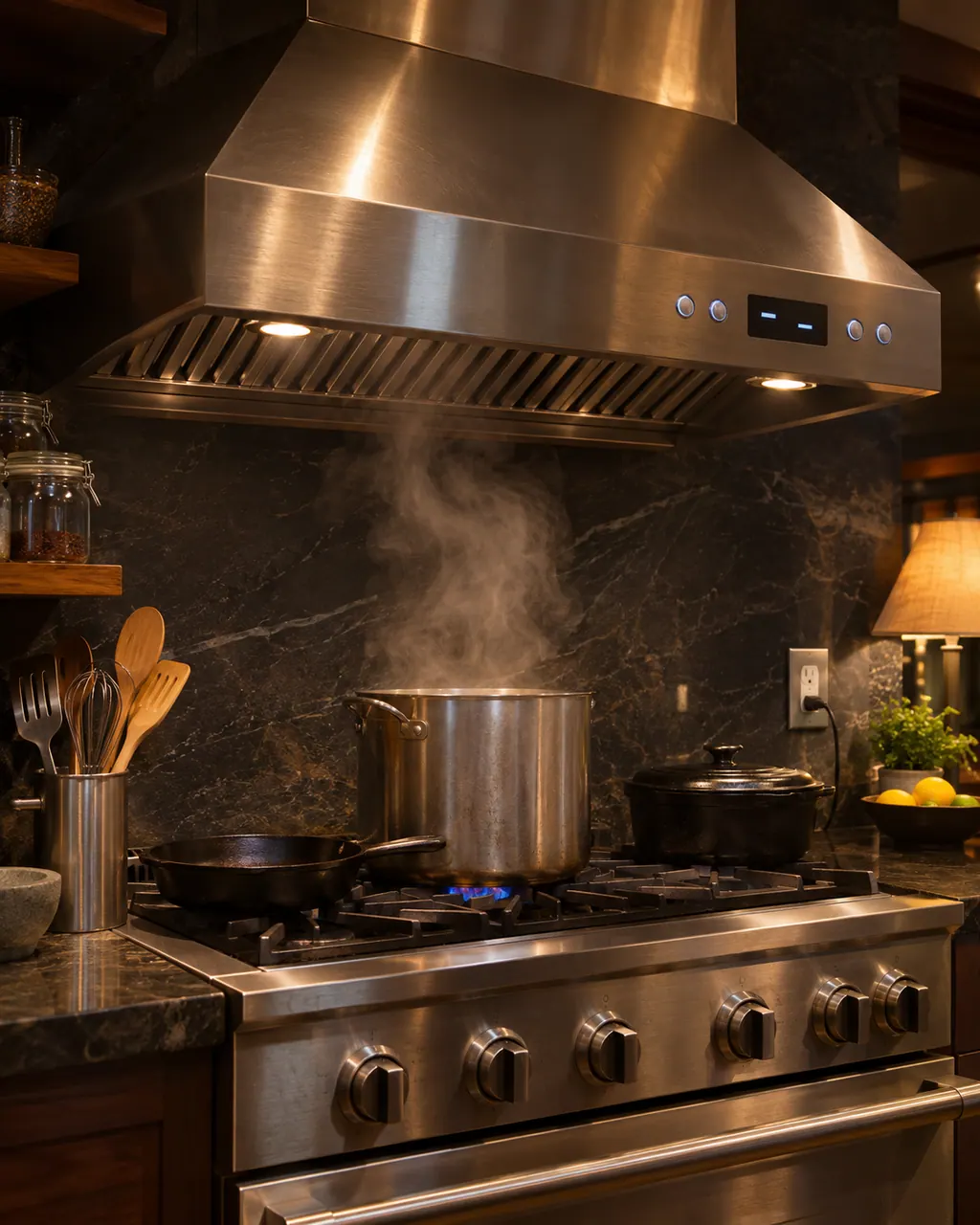
A hot pan, an open oven door or a wok on a strong burner can push the air under the hood past the sensor’s limit. Turn the heat down and watch the blower settle.
The guide says the blower goes back to its original setting once the temperature is normal, and the display clears.
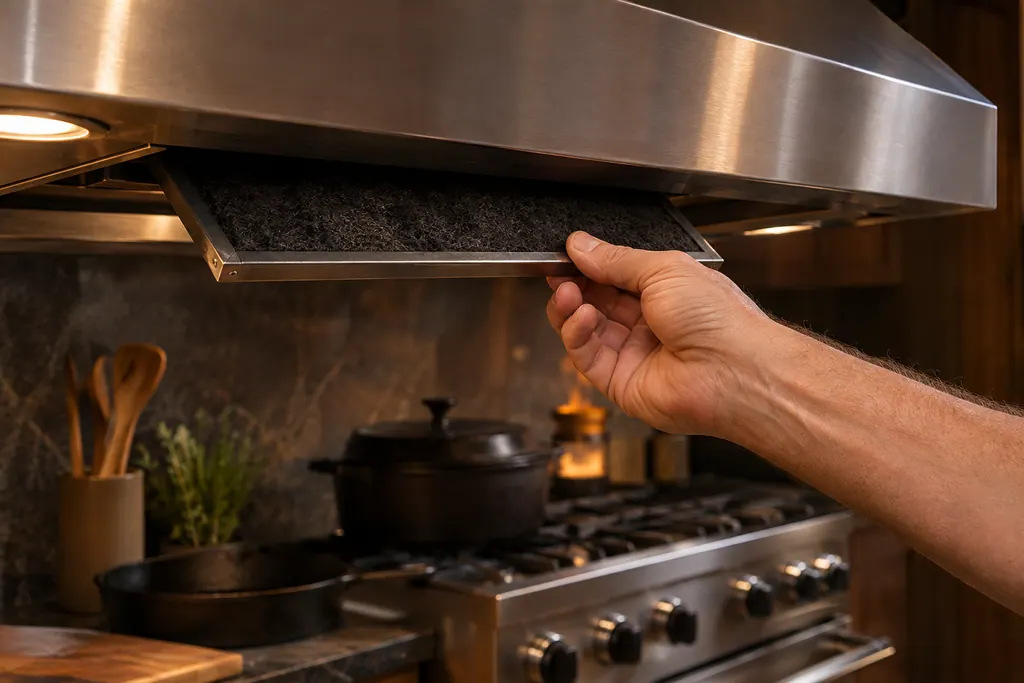
If the hood stays connected while you wipe it down, the thermostat can start the blower. Unplug the power cords from the control panel first, as the caution says.
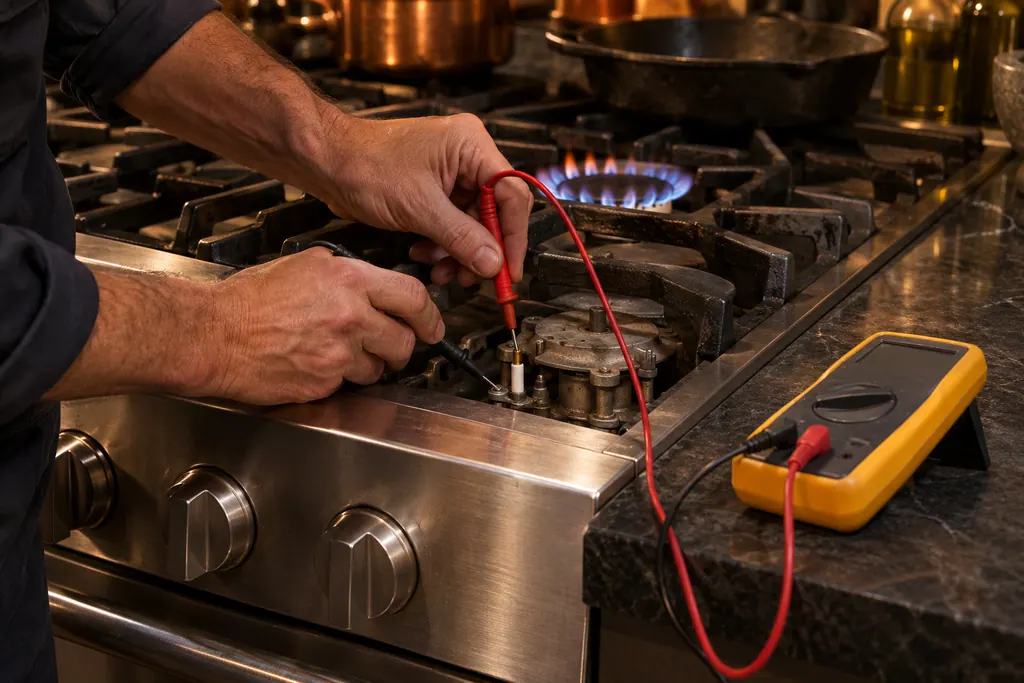
A blower that goes to high in a cool kitchen with nothing cooking points at the sensor or the control, which we would test.
Pass along the model and the checks you ran, then open a visit request from this spot.
Book a visit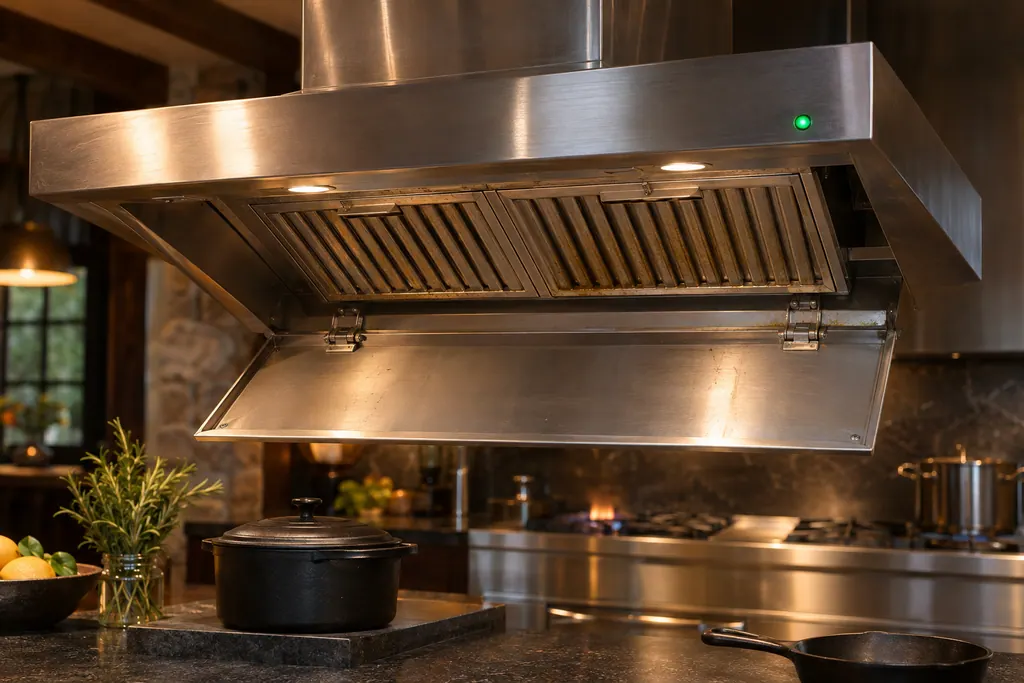
A simplified sketch, because the inside of a Viking differs by series. Tap a highlighted part for its photo and the matching test.
The hood has a thermostat that watches heat above the cooking surface. If it senses excessive heat, it starts or speeds up the blower.
Read the supporting manualIf the blower is off, the sensor turns it on at HIGH. If the blower is already running slower, it raises it to HIGH.
Read the supporting manualIt does. When the temperature level returns to normal the blower resumes its earlier setting and the display clears.
Read the supporting manualYes. If power to the hood stays connected while you clean, the thermostat can switch the blower on. Unplug the cords from the control panel first.
Read the supporting manualManufacturer document
Viking Range, LLC (official manual PDF)
F21204F / PDF p.4
Manufacturer document
Viking Range, LLC (official manual PDF)
F21286J / PDF p.4
The 3 Series RVCH chimney hoods and the 5 Series Professional hoods print the same heat sensor rule. Hoods without a heat sensor will not do this.
Yes, when the sensor reads strong heat above the cooktop. It only does so on hoods that have the heat sensor thermostat.
The guides list no switch for it. The way to avoid surprises is to unplug the hood while cleaning and to ease off the heat under it.
The thermostat is live while the hood is powered. The caution says to disconnect power during cleaning so it cannot start the blower.
If the blower runs at high with the cooktop cold and the kitchen cool, the sensor is giving a false reading and we should look at it.
Viking codes, symptoms, parts, visits
A blinking filter clean icon on a Viking 5 Series downdraft means the blower has run 30 hours since the last reset. Wash the two grease filters, then touch and hold the icon for two seconds or more to reset it.
A Viking hood that lets smoke and steam escape is usually clogged filters, too low a fan speed, a draft across the cooktop or a charcoal filter past its life. Clean the grease filters, raise the speed and replace a recirculating charcoal filter. Book a technician if the airflow stays weak.
Book a diagnostic for your series at the appliance itself.
Office particulars and the entry details to give us.