On this page
- The four convection modes are Convection Bake, TruConvec, Convection Roast and Convection Broil. 1
- Convection Roast and Convection Broil use a high-speed fan, and some noise from it is normal. 1
- Set the dial 25 F under the recipe in any convection function. 1
- Two racks: positions 2 and 4 or 3 and 5. Three racks: any mix of 2, 3, 4 and 5. 1
- Convection Bake can run without preheating, on the middle rack, one rack only. 1
What are the four convection modes?#
The manual lists Convection Bake, TruConvec, Convection Roast and Convection Broil. All four move heated air with the fan on the rear wall; they differ in which elements work and how fast the fan runs. The manual also says the oven has up to nine cooking modes in all. 1
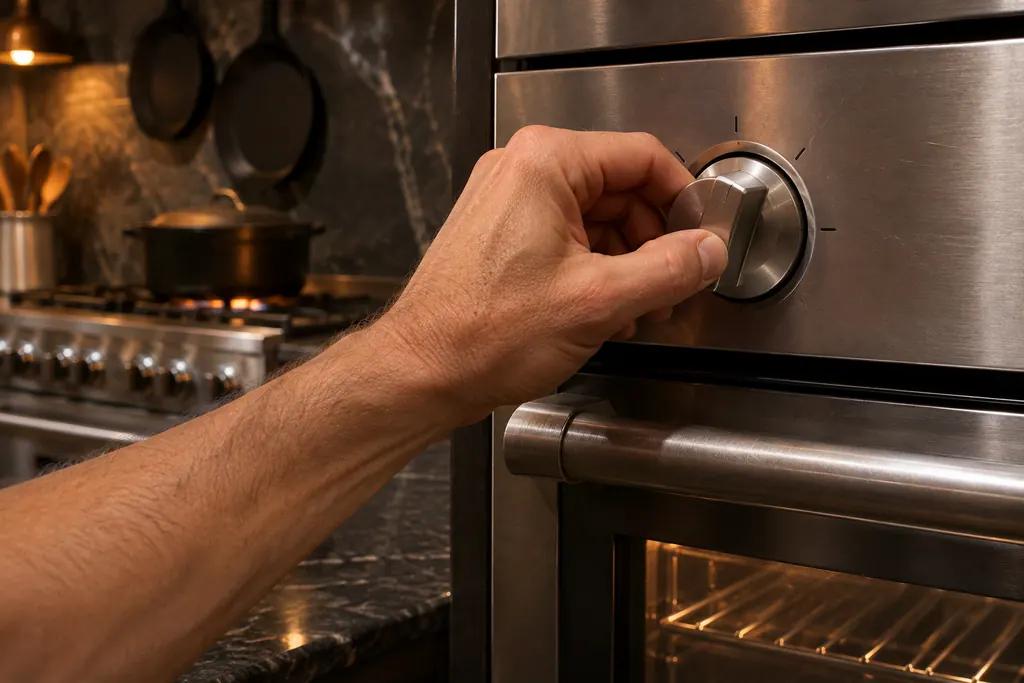
This guide covers the Professional Built-In Electric single and double ovens in the manual named below, including the French door versions. Each oven has a separate temperature dial and an oven function selector, so you choose the mode first and then the temperature. 1
| Mode | Elements and fan, as printed | Use it for |
|---|---|---|
| TruConvec | Rear element at full power, no direct heat from top or bottom; rear fan circulates air | Gentle cooking: pastries, souffles, yeast breads, quick breads, cakes; single or multiple racks |
| Convection Bake | Bottom element at full power, top broil element at supplemental power; fan circulates air | Baking and roasting, multi-rack loads, heavier or frozen foods |
| Convection Roast | Convection element with the inner and outer broil elements; reversible fan runs faster in each direction | Whole turkeys, whole chickens, hams |
| Convection Broil | Top element at full power plus fan airflow | Thick cuts of meat |
Which convection mode should I use?#
Use TruConvec for breads, cakes and cookies on one or more racks, Convection Bake for heavier or frozen items and multi-rack loads, Convection Roast for whole birds and hams, and Convection Broil for thick cuts. The selector chart in the manual says the same. 1
TruConvec is the manual's pick for large batches of baked goods, with up to six racks of cookies at once listed on the selector chart. The manual says no special bakeware is required and that breads and cookies come out evenly textured with golden crusts. 1
Convection Bake is described as the way to prepare food in quantity on multiple racks, something a standard oven cannot do. The manual adds that foods can be baked and roasted at the same time with minimal taste transfer, even when the dishes differ, such as cakes, fish or meat. 1
Convection Roast seals moisture inside large roasts and saves time compared with older single-fan modes. 1
Convection Broil works like regular broiling with air circulation added, and the airflow also lowers peak temperatures on the food, which reduces smoke. The broiling chart shows what that means in minutes: bone-in chicken breast or chicken pieces take 25 to 30 minutes in Convection Broil on rack position 2, compared with 40 to 45 minutes in Medium Broil. A one-inch boneless breast takes 15 to 20 minutes either way. 1
How do I adjust a recipe for convection?#
Set the dial 25 F under the recipe temperature and check the food early. The manual says times for standard and convection baking are the same, though a single item or small load can take 10 to 15 percent less, and items needing over 45 minutes can save the same share. 1
The manual's tips for convection cooking add several points a home cook can use right away.
- Convection is intended for multi-rack baking and for heavier foods. 1
- Items cooked in a convection function can be over baked easily, so pull them out just before they seem done; they keep cooking while they stand. 1
- If a recipe is homemade or unfamiliar, bake it conventionally first, then follow the convection guidelines for a similar food, and change only one variable at a time: time, rack position or temperature. 1
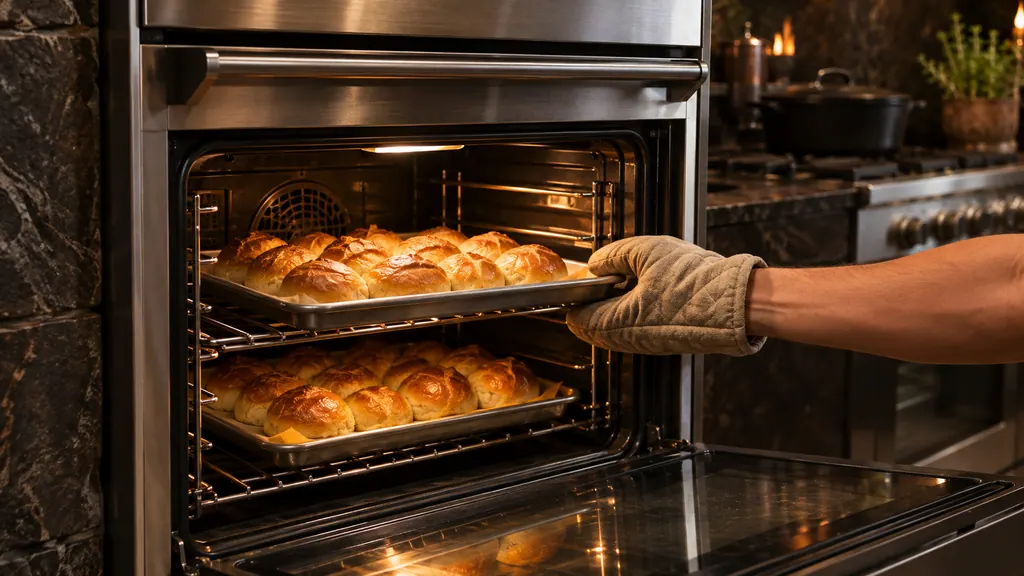
- Foods that suit two or three racks include pizza, cakes, cookies, biscuits, muffins, rolls and frozen convenience foods. 1
The convection baking chart in the manual shows the pattern with numbers. Frozen biscuits, for example, are listed at 350 F on racks 2 and 4 in convection, against 375 F in conventional bake, for the same 23 to 28 minutes. 1
Where do the racks go?#
Use positions 2 and 4, or 3 and 5, for two racks; use any mix of 2, 3, 4 and 5 for three. Position 1 is nearest the oven floor and position 6 is farthest. Leave 1 to 2 inches of air space around every pan. 1
Arrange the racks before you heat the oven. The manual notes that every oven has six rack positions and at least one TruGlide rack, which glides outward when pulled and makes heavy items easier to remove. Large 15 by 13 inch trays that cover most of a rack do best in positions 2 or 3. 1
For more than one rack, the manual recommends one of the convection modes with the 2nd and 4th, or 3rd and 5th, positions for more even baking. In plain conventional bake it recommends no more than one rack for best results. 1
Do I need to preheat in convection?#
Preheat in every baking mode except Convection Bake, which offers a no-preheat option for one rack. For TruConvec the manual says a slightly longer preheat to 350 F than in Bake is normal, because all rack positions must reach the set temperature. 1
The oven uses partial power from the broiler to reach the preheat temperature in many modes, so the manual advises against putting food in during preheat. Room temperature and supply voltage matter too: a significantly colder room, or a power supply below 240 VAC, can lengthen preheat. 1
- 1
- 2
- 3
- 4
What about the fan noise?#
Convection Roast and Convection Broil use a high-speed fan, and the manual says some noise from that speed is normal. The manual attaches this note to those two modes only. A new scrape, rattle or grind in any mode is not described and deserves a visit. 1
The manual describes a reversing fan that is two times larger than most on the market. In Convection Roast it runs faster in each direction. If your oven is quiet in Bake and louder in Convection Roast, that matches the manual. 1
Our oven fan noise and cooling fan page covers the self-clean fan and other sounds. If the fan does not turn at all in a convection mode, or the food cooks unevenly in every mode, see temperature and uneven baking.
Can the fan dehydrate or defrost?#
Yes, with the TruConvec selector. For dehydrating, set a low temperature (200 F on the function page) and use drying racks, which are not included. For defrosting, set the temperature control to OFF so only the fan runs, and do not leave thawed food in there beyond two hours. 1
The manual explains why the defrost setting works: the fan accelerates natural defrosting without heat. For dehydrating, it says only fresh, top-quality foods should be used, because dehydration does not improve quality. 1
Which dishes should skip convection?#
Custard is the manual's own example. Because of food density, surface texture and consistency, some foods are prepared more successfully with conventional Bake, and the manual recommends conventional baking for custard. You may find a few more dishes that behave the same way. 1
If a cake is burned at the sides and underdone at the center, the baking problem chart points to excess heat, a wrong pan size or too many pans. Food too brown on the bottom can mean dark pans, a wrong rack position or the wrong bake setting; the chart says to adjust to conventional or convection as needed. 1
Our range repair page lists the oven work we handle.
What should I jot down about my oven?#
Write down the mode you used, the temperature you set, the racks you used and what the fan sounded like.
- Which function was selected, and was it a single or double oven?
- Did you take 25 F off the recipe temperature?
- Which rack positions held the pans?
- When did the noise start, and does it change between modes?
Sources#
- Use & Care, Professional Built-In Electric Single and Double Ovens VSOE130 / VSOE527 / VSOE530, VDOE130 / VDOE527 / VDOE530, French Door Ovens VSOF7301 / VDOF7301Viking Range, LLC (official manual PDF) · form 066749-000 (082625) · PDF p.2, 6-8, 10-12, 17-18, 20, 26 (functions, convection tips, preheat, charts, dehydrate and defrost)